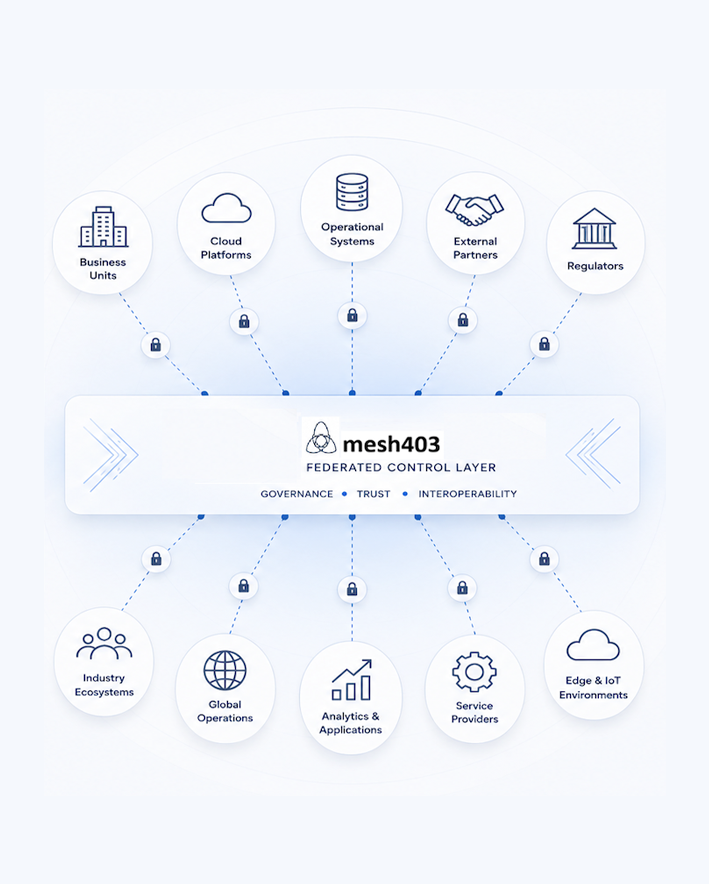
The challenge is no longer collecting data..
The challenge is governing how data moves across systems, domains, and organizations.
Why Mesh403
The Illusion of Modern Data Platforms
Enterprises have invested in modern data platforms, multiple tools, and cloud technologies to store, process, and analyze data at scale.
Data is more abundant and more accessible within individual teams and systems than ever before.
Yet behind this progress lies an illusion: everything looks connected, but nothing works together with trust.
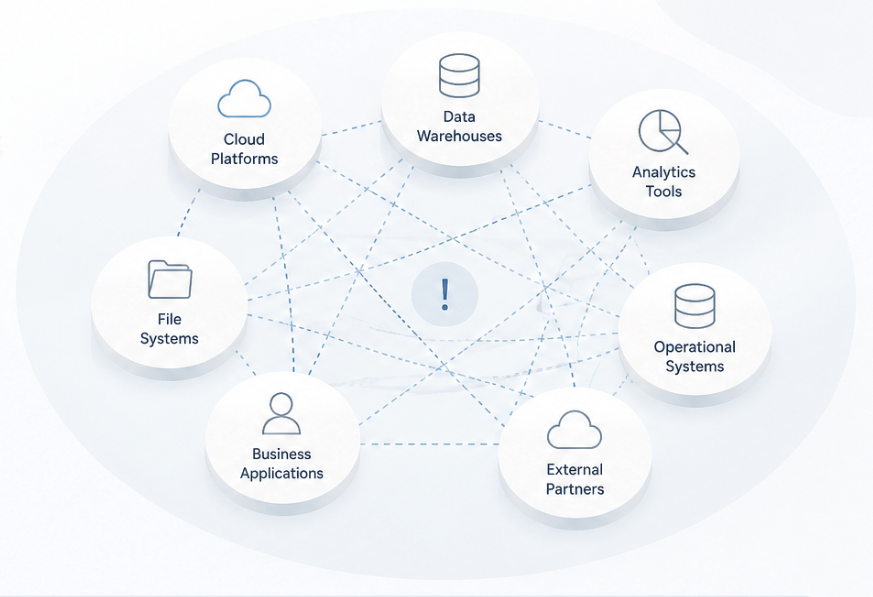
Fragmented systems and data silos
Inconsistent policies and access controls
Broken lineage and poor visibility
Disconnected identities and trust models
Manual processes and high effort
Where Existing Solutions Fall Short
Most enterprise technologies solve part of the problem - but none provide a consistent trust and governance layer across distributed ecosystems.
Governance Platforms
Modern governance platforms help define policies, ownership, and metadata standards. But governance often stops at documentation and internal visibility.
Policies rarely travel consistently across systems, domains, or organizational environments.
Integration Platforms
Integration and event platforms connect systems at scale, but they are not designed to enforce federated governance, lineage, or cross-domain trust.
Data movement remains heavily dependent on custom integration logic and operational coordination.
Cloud Data Platforms
Cloud platforms improved data accessibility and scalability within enterprises. However, interoperability across business units, cloud boundaries, external partners, and independent governance domains remains fragmented and difficult to operationalize.
Data Exchange & Collaboration
Data sharing initiatives often rely on duplicated datasets, manual approvals, disconnected identities, and inconsistent access models.
Trust, lineage, and policy enforcement frequently break once collaboration extends beyond isolated environments.
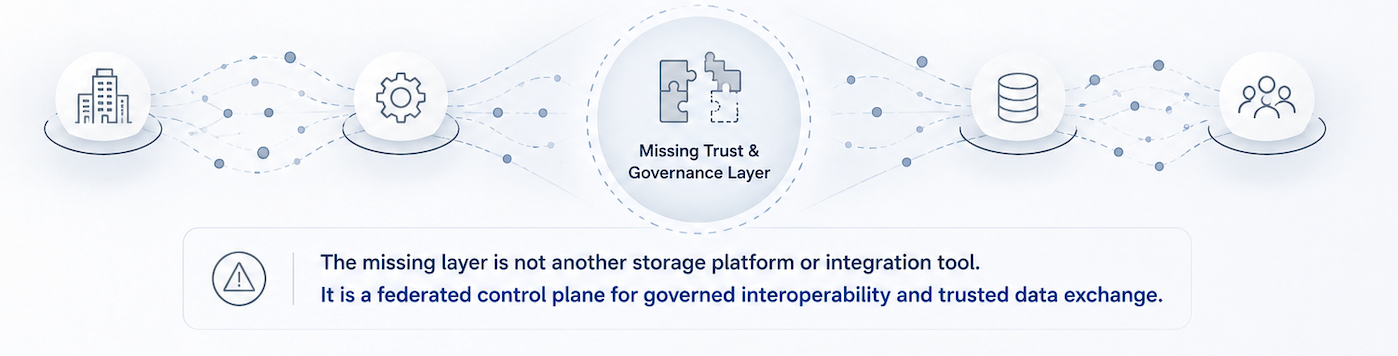
The Real Challenge Is Trust Across Distributed Ecosystems
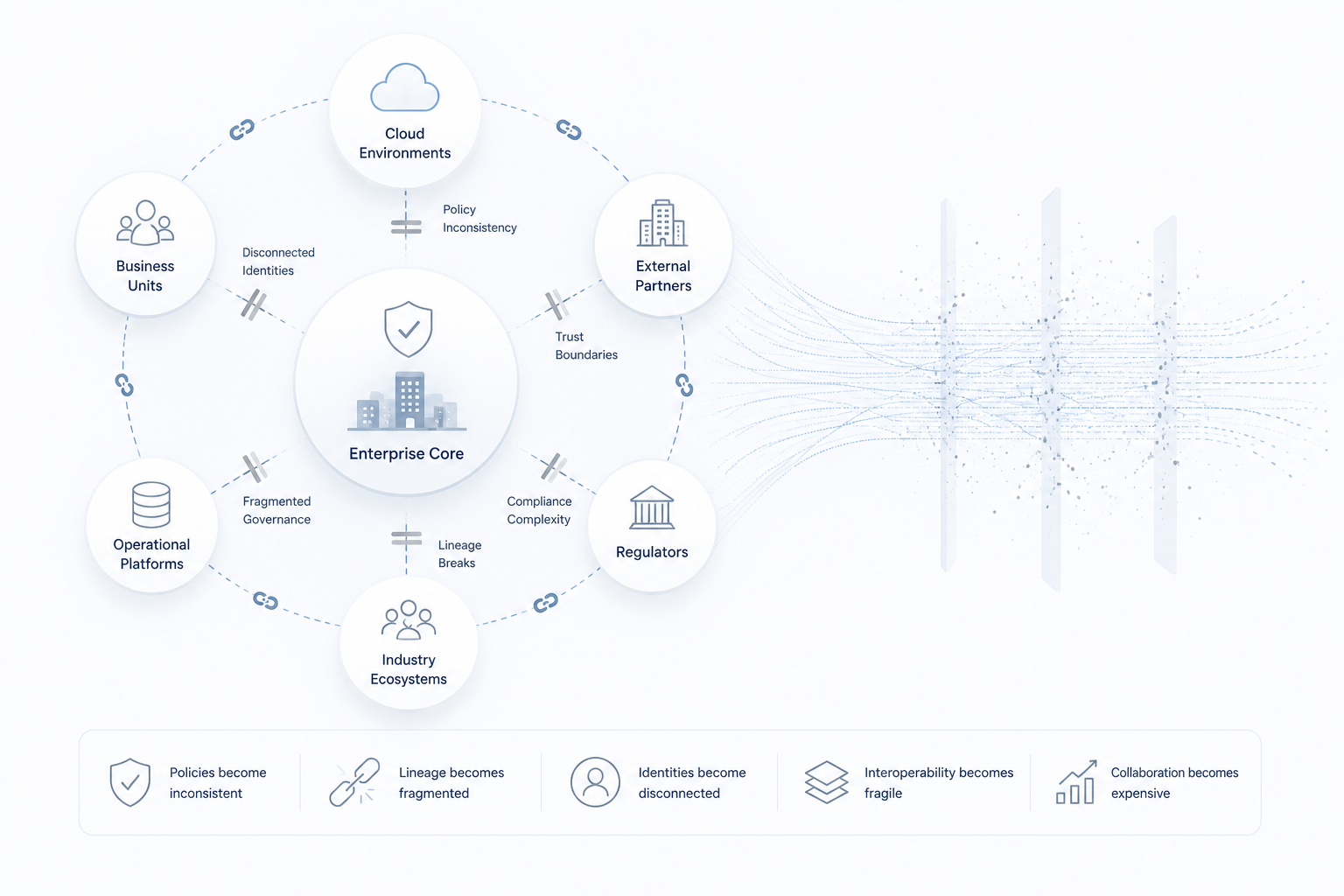
The challenge is no longer accessing data. The challenge is ensuring that governance, trust, lineage, identity, and policy enforcement remain intact as data moves across distributed environments.
Without this shared trust layer:
- policies become inconsistent
- lineage becomes fragmented
- identities become disconnected
- interoperability becomes fragile
- collaboration becomes operationally expensive
Enterprises do not need another isolated platform. They need a federated control layer that enables trusted interoperability across systems, domains, and organizations.
A Federated Approach to Trusted Interoperability
Federated Governance
Consistent policy enforcement, entitlements, lineage, and governance across distributed environments.
Trusted Connectivity
Secure interoperability between systems, platforms, domains, and external ecosystems.
Identity & Trust
Federated identity, zero-trust enforcement, and policy-aware access across organizational boundaries.
Data Exchange
Governed discovery, access, and operationalization of trusted data products and services.
Mesh403 does not replace enterprise platforms.
It enables them to operate together with trust, governance, and interoperability.
Mesh403 provides the governance and trust layer
Required for modern data ecosystems to collaborate at scale.